Our studies
We are interested in characterising and understanding the physical mechanisms in play in movements, deformations and transfers in material and in a wide diversity of complex systems, from micrometric scales (typical cell scale) to several thousands of kilometres (scale of whirlpools in geophysics and astrophysics), or in composite materials or musical instruments.
Our approaches to modelling and experimentation
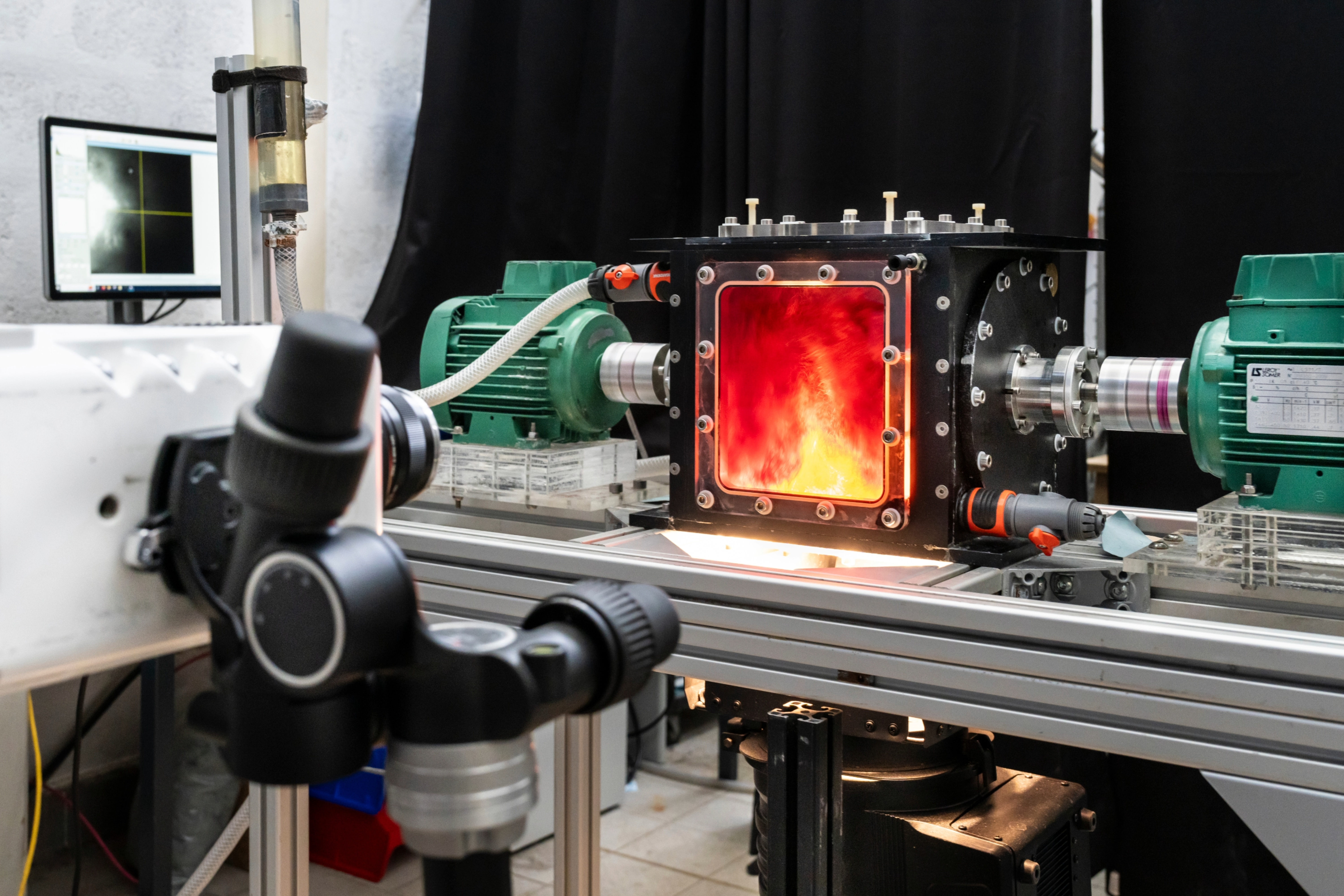
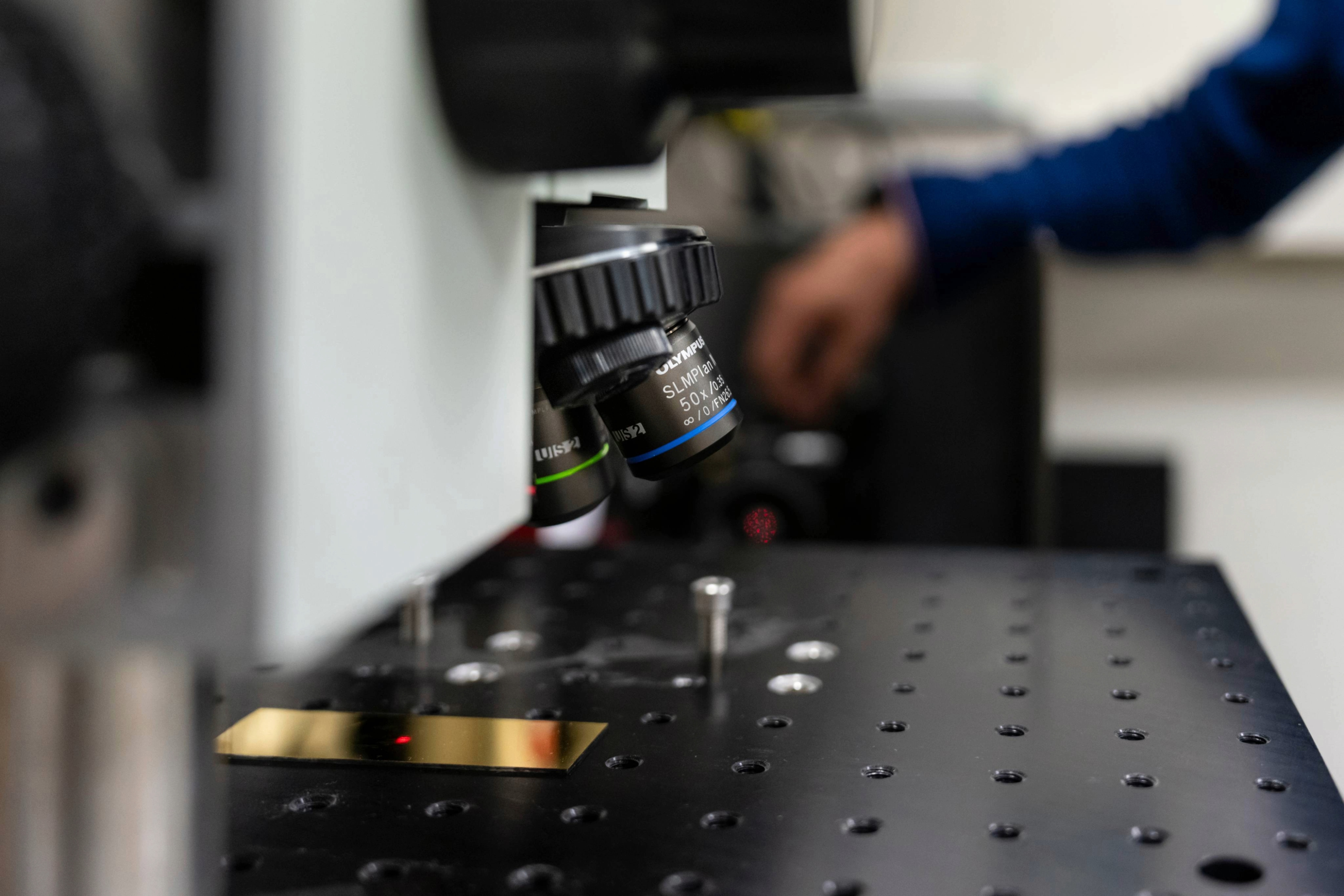
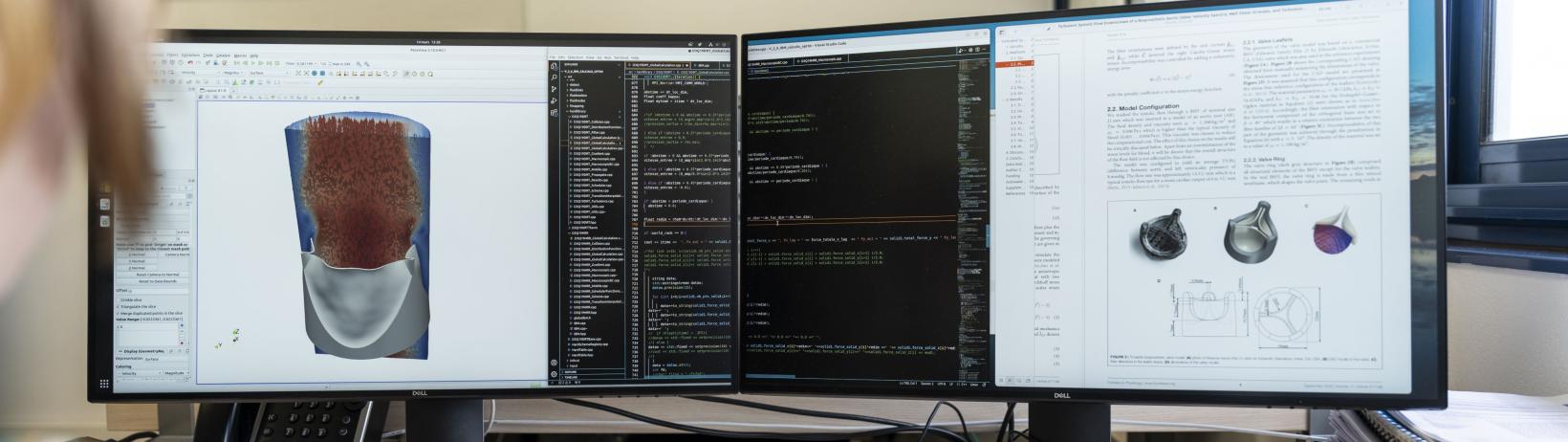
One of the Institute’s assets is also the diversity of approaches developed in theory and modelling as well as in experimentation and in the field of digital simulations. This is a key focus for our Institute, which aims to strengthen development synergies and the sharing of tools and platforms, both digital and experimental, from fundamental to applied research:
- A wide range of experiments, from fundamental research to large-scale facilities linked to industrial issues or related scientific fields.
- Modelling ranges from the development of physical models to advanced numerical methods in simulation codes for complex flows.
Research fields covered
These concern mechanics and energy, applied to a wide range of systems, from the most common to the most innovative. The main disciplines concerned therefore come under the umbrella of:
Fluid mechanics has a long tradition in Marseille. Long motivated by the properties of turbulent flows, fluid mechanics has been driven by several prolific schools of thought based on nonlinear physics, applied mathematics and soft matter physics. Fluid mechanics is present in a number of fields:
- Issues linked to turbulence and instabilities remain very active and are open to systems involving complex linkages (stratification, rotation, electromechanical effects).
- Multiphase issues in general and those linked to surface and interface effects have grown considerably (fragmentation, bubbles, droplets, wetting, waves).
- High-speed flows remain an active subject due in particular to the presence on site of large instruments (supersonic tunnels, shock tubes).
- Complex fluid flows (blood, suspensions, granular environments, vesicles, etc.) have undergone major development.
- Fluid dynamics is largely open to living sciences with many biomechanical questions.
Digital fluid mechanics has a strong presence in laboratories, as an essential investigation tool, but also as a research subject with the development of methods and diagrams. All of this research is principally conducted in the three laboratories IRPHE, M2P2 and IUSTI.
Solid mechanics studies focus on 4 main fields principally located at LMA but also at IRPHE:
- Scaling and micromechanics issues (micro-macro transition, composite standardisation methods, solid fragmentation).
- Contact and friction interface issues (friction, seizing, adhesion, etc.).
- Multiphysics couplings (thermal-chemical-mechanical on elastomers).
- Study of structures (expandable structures, instabilities and non-linear effects).
In the broad sense, energy has made a revival due to societal challenges associated with energy and the environment. Historically well rooted in the Marseille-based laboratories around heat and combustion, the different fields were broadened in particular to cover questions pertaining to changes of phase (boiling, drying, crystal growth), the intensification of transfers (in porous environments), problems of instability and even questions of material property characterisation. Combustion still has its place with the study of the instabilities of flame fronts and the problem of fires (forest fires, compartmentalised fire) and the development of the multiphase combustion code.
Acoustics is a field of study that is traditionally located within the LMA. Recent work in the field can be divided into two classes:
- Acoustics in human beings that touches on hearing difficulties (cochlear implant), noise characterisation and control and the study and design of musical instruments.
- Acoustics as a means of investigation in engineering. Wave propagation in complex environments, geological structure imaging, non-destructive testing and medical imaging are some examples of developments in acoustics.
Process engineering, which incorporates the study, design and optimisation of physico-chemical and biological transformations of materials and energy, is moving increasingly closer to environmental problems. Studies at the M2P2 laboratory focus on processes based on supercritical fluids that represent an alternative to the use of organic solvents, membrane processes in particular for the purification of high added-value composites (design, characterisation), and water treatment processes (biological processes, bioreactors, thermal processes).
Large field of applications
The different scientific issues set out above are principally addressed in strict connection with applications in the following three fields:
The fields of investigation of the area of Health engineering at the IMI concern biomechanics, mechanobiology and the optimisation of systems or processes for the health industry. The fields are linked to the biomechanics of fluids and solids (biological tissues, physio-pathological flows, fluid-structure interactions, etc.), acoustics (auditory perception, psychoacoustics, diagnostic imaging and ultrasound therapy, etc.) and process engineering (chemical and pharmaceutical industry, particle generation, etc.). The Institute’s work relates to the development of modules and tools based on engineering sciences designed to improve understanding of physical mechanisms through the diagnosis of pathologies and the management of patients, or through the design of biomechanical prostheses.
The fields of investigation of the area of Health engineering at the IMI concern biomechanics, mechanobiology and the optimisation of systems or processes for the health industry. The fields are linked to the biomechanics of fluids and solids (biological tissues, physio-pathological flows, fluid-structure interactions, etc.), acoustics (auditory perception, psychoacoustics, diagnostic imaging and ultrasound therapy, etc.) and process engineering (chemical and pharmaceutical industry, particle generation, etc.). The Institute’s work relates to the development of modules and tools based on engineering sciences designed to improve understanding of physical mechanisms through the diagnosis of pathologies and the management of patients, or through the design of biomechanical prostheses.
The fields of investigation in the area of Transport and sustainable mobility of the IMI concern the aeronautics, space, automotive and railway major industrial sectors. The Institute’s work relates to the development of innovative tools and models designed to improve the understanding and characterisation of physical mechanisms in play in movements, deformations and transfers in material. This research mobilises a wide disciplinary field in the fields of aerodynamics/hydrodynamics (wakes, swirl dynamics, impact/boundary layer, cavitation, vortex flows, etc.), fluid/structure interaction, combustion (mix, reactive flows, hydrogen, etc.), materials and structures (thin structures, buckling, deformations, interface and adhesion, composites, etc.) up to waves and acoustics (micro-perforated absorbers, propagation, non-destructive testing, etc.).
The fields of investigation of the area of Energy transition are rapidly changing and being adapted to new societal challenges to have greener and more renewable energy as well as more frugal or less pollutant energy systems. These challenges motivate a lot of research in particular around combustion, nuclear, fusion with the proximity of the ITER project for energy efficiency and heat exchangers, alternative energies such as wind turbines, biomass and biofuels. Our work relates to the development and use of models and tools designed to improve understanding of fundamental physical mechanisms linked to transport and to transfers, but also to the optimisation of many energy systems in operational conditions.
This important work that is part of a partnership and/or contractual activity that is developed with the socio-economic world, is underpinned by a certain number of leading-edge operational competencies within experimental and digital platforms.
The fields of investigation in the area of Transport and sustainable mobility of the IMI concerning the aeronautical, space, automobile and railway major industrial sectors. The Institute’s work relates to the development of innovative tools and models designed to improve the understanding and characterisation of physical mechanisms in play in movements, deformations and transfers in material. This research mobilises a wide disciplinary field in the fields of aerodynamics/hydrodynamics (wakes, swirl dynamics, impact/boundary layer, cavitation, vortex flows, etc.), fluid/structure interaction, combustion (mix, reactive flows, hydrogen, etc.), materials and structures (thin structures, buckling, deformations, interface and adhesion, composites, etc.) up to waves and acoustics (micro-perforated absorbers, propagation, non-destructive testing, etc.).
Concevoir la ville de demain impose une mobilisation inédite de savoirs et de techniques. C’est le pari réussi de l’Institut de Mécanique et d’Ingénierie (IMI), dont l’axe « Milieux urbains et villes durables » regroupe des projets en mécanique des fluides et des solides, acoustique, énergétique ou encore génie des procédés. Ces travaux s’intéressent à la caractérisation et à la compréhension des mécanismes physiques en jeu dans les mouvements, déformations et transferts dans la matière, et ce à différentes échelles, allant de la ville aux matériaux et systèmes nécessaires à sa construction comme à son bon fonctionnement. À travers la modélisation théorique, les simulations numériques et l’expérimentation, les chercheurs œuvrent aux grands enjeux urbains : adaptation au changement climatique, réduction des nuisances, performance énergétique et gestion durable des ressources. Six plateformes technologiques labellisées appuient ces recherches en recréant en laboratoire les conditions du réel.